On June 2, a striking exhibition opened at the Kyiv Picture Gallery. The "New Military Landscape" by the Forest brothers duo - artists Igor Gusev and Stas Zhalobnyuk - presented massive canvases where drones, fiber optics, and fortifications do not disrupt the natural harmony, but actively create it. This visual paradox exposes a deeper transformation occurring across the arts. As the lines between the battlefield and civilian life blur, maintaining a sense of self becomes a profound challenge. The quiet struggle for Ukrainian culture wartime individual identity is now the defining narrative of a generation.
Beneath the surface of this newly militarized aesthetic lies a crucial tension. The challenge is not merely about documenting the horrors of combat, but about empowering individual expression for those who are not necessarily experienced creators. It is a delicate balancing act between chronicling a massive collective trauma and nurturing unique, idiosyncratic voices.
The Monolith Myth and the Civilian Reality
There is a pervasive myth that a nation engaged in a massive conflict produces a monolithic, purely collective culture. We expect anthems of unified heroism and stark, black-and-white narratives. Yet, the reality is far more complex and demanding. The true challenge lies in preserving civilian voice Ukrainian arts while authentically documenting the reality of the trenches.
When a significant portion of society is mobilized, artistic expression inevitably shifts. However, if the collective military experience completely overshadows personal nuance, the culture risks losing its fundamental humanity. The tension is palpable across galleries and publishing houses alike.
How does a soldier-poet remain a poet first? How do we ensure that the push to chronicle the war does not erase the delicate traits of the artist? This is exactly the problem curators and editors face today: preventing the uniform from masking the individual.
Amplifying Voices from the Front
The answer is not to resist the militarization of art, but to channel it through deeply personal lenses. Initiatives led by the Cultural Forces platform are actively working to bridge this gap. By providing structured support for military personnel and veterans, they create spaces where raw combat experience meets refined artistic craft.
This approach acknowledges that not every soldier is a natural storyteller, yet their perspectives are indispensable. By offering platforms and editorial guidance, these initiatives implicitly address the need for nurturing individual expression Ukrainian war. It is about giving veterans the tools to translate chaos into narrative, ensuring their unique perspectives are articulated clearly.
Dissecting the New Landscape
To understand this shift, we must look closely at the visual and literary artifacts emerging today. In the Forest brothers exhibition, the attributes of war - camouflage nets, armored vehicles, and drones - become deeply ambivalent. They represent both a lethal threat and the ultimate protection against that threat.
Over time, this duality settles into a strange neutrality on the canvas. The machinery of war becomes as organic to the landscape as trees or birds. This is a logical evolution of the landscape genre, which must reflect the reality outside the gallery walls.
This organic integration extends far beyond visual arts. History shows us that profound cultural shifts often follow massive conflicts. J.R.R. Tolkien's "The Lord of the Rings" and Antoine de Saint-Exupery's "The Little Prince" are fundamentally texts written by veterans. Today, a similar organic militarization is taking root. The focus remains on Ukrainian culture wartime individual identity, ensuring that the person behind the camouflage is seen, heard, and understood as a creator, not just a combatant.
Three Pillars of Cultural Integration
The theoretical balance between collective duty and personal artistry plays out in highly practical arenas. Here is how this dynamic is currently shaping the landscape.
1. The Literary Stage
On May 31, the Book Arsenal literary stage hosted a pivotal event focusing on the promotion of military literature. Poet and serviceman Igor Mitrov, alongside colleagues like Vasyl Karpyuk, Volodymyr Kondratiev, Oleksandr Babinsky, and Andriy Ovcharuk, spoke candidly about this organic militarization. They demonstrated that poetry written in the trenches is not just documentary evidence. It is high art that demands a critical, literary reception, proving that the artistic spirit does not pause for artillery fire.
2. The Visual Frontline
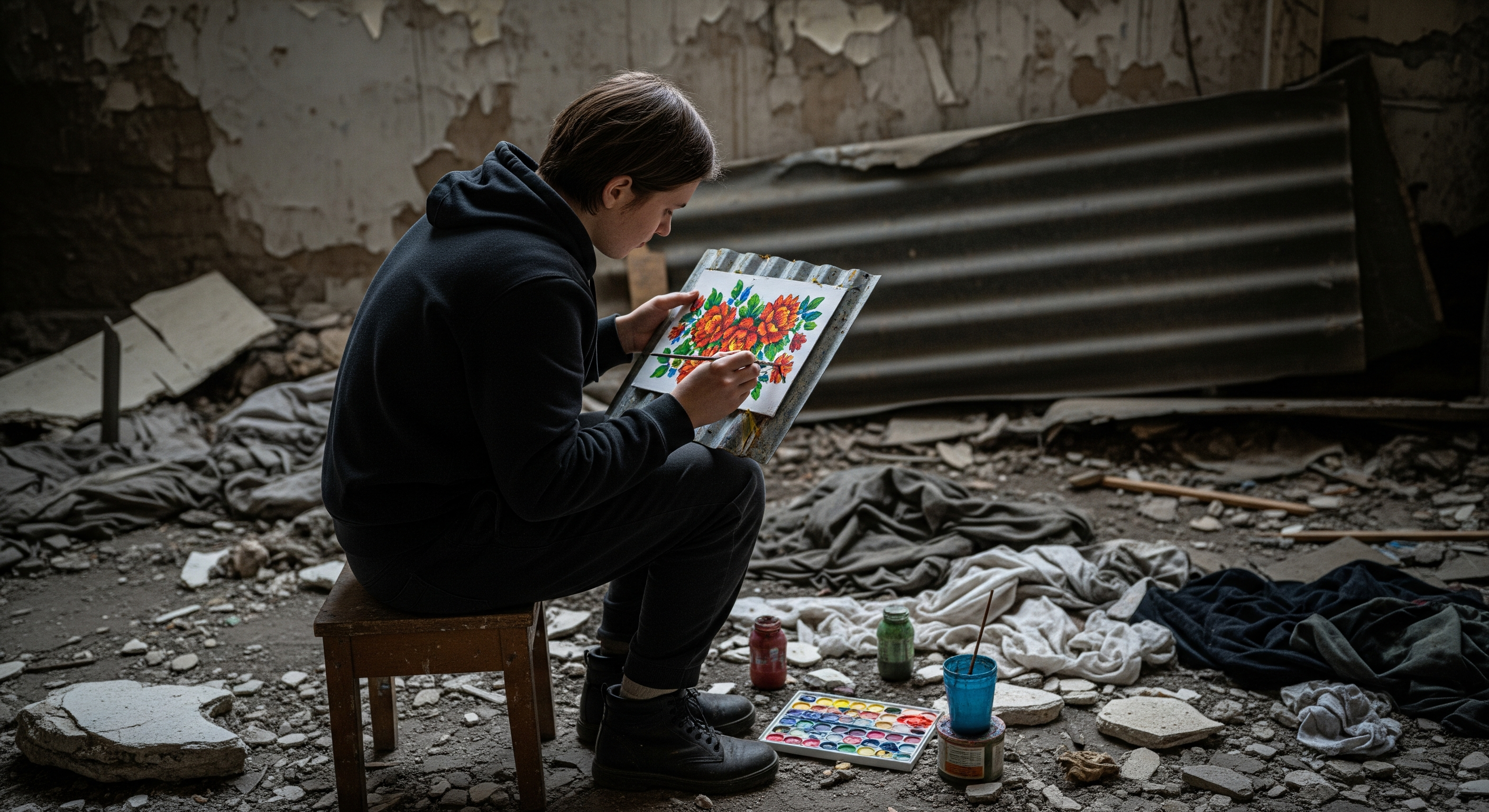
As seen in the recent gallery exhibitions, visual artists are redefining the boundaries of landscape painting. By treating drones and fortifications as natural elements, they force the viewer to accept the new reality without losing the emotional depth of traditional art. The individual artist's eye dictates how the war is framed, turning collective defense into a deeply personal visual statement.
3. The Trench Library
The "Book to the Front" project illustrates the demand for intellectual survival. By the end of May, the initiative had delivered over 55,000 books to military personnel. This massive logistical effort, which won the Chytomo Prize in 2025 for reading promotion, proves that soldiers are desperate for narratives. Just as in previous historical conflicts, books sent to hospitals and frontlines serve as a vital mechanism for soldiers to disconnect from harsh realities and reconnect with their civilian identities.
The Core Insight: Processing Over Glorification
The defining revelation here is that the militarization of culture is not about glorifying combat. It is a necessary mechanism for psychological and societal survival. When a soldier reads a novel in a dugout, or when a veteran writes a poem about the mundane details of trench life, they are actively fighting to retain their humanity.
The presence of war in art is not a surrender to violence. Instead, it is the ultimate assertion of Ukrainian culture wartime individual identity. By processing the trauma through art, the creator reclaims ownership of their story. They refuse to be reduced to a statistic, transforming collective tragedy into a deeply personal legacy that will educate future generations.
The Strength of an Authentic Narrative
Embracing this duality offers profound advantages for the cultural ecosystem. First, it injects an unprecedented level of authenticity into the national arts. The voices emerging from the frontlines carry a weight and truth that cannot be replicated by pure observation or second-hand accounts.
Second, it expands the parameters of artistic freedom in Ukrainian conflict. Creators are no longer bound by pre-war conventions. They have the liberty to invent new genres, blend stark realism with surrealism, and challenge audiences worldwide. This raw, unfiltered output resonates deeply with global audiences, bridging the gap between those who experience the war firsthand and those watching from afar.
When the Collective Drowns the Individual
However, this rapid integration of military themes carries significant risks. The most pressing danger is the expectation that every veteran must produce profound, publishable art. Writing and painting require distinct skills that not everyone possesses, even if they have lived through extraordinary events. Forcing a narrative can lead to artificial or deeply uncomfortable results.
Furthermore, there is a risk of marginalizing civilian artists. If curators and publishers prioritize only frontline narratives, the broader spectrum of societal experience might be ignored. When a culture demands that every poem or painting address the conflict directly, it inadvertently stifles the very artistic freedom it claims to protect. The pressure to conform to a heroic, collective narrative can easily crush the fragile voice of the individual creator. This is a trap that publishers and cultural institutions must actively avoid.
What This Means for Curators and Readers
Understanding this tension requires immediate, practical shifts in how we consume and promote art.
For cultural institutions, the mandate is clear: provide mentorship, not just a microphone. Programs must offer editorial guidance to emerging veteran writers, helping them refine their craft without sanitizing their experiences. They must act as facilitators who help translate raw experience into enduring art.
For the global audience, the task is to read and view these works critically. Do not consume frontline literature merely as historical documentation. Engage with it as art. Look for the stylistic choices, the metaphors, and the unique worldview of the author. By doing so, you validate their effort to remain an artist in the face of destruction.
Key Takeaways
- The integration of military elements into art, such as the "New Military Landscape," represents an organic evolution of culture, not a loss of artistic integrity.
- Balancing the collective war narrative with the preservation of personal voice is the central cultural challenge facing editors and curators today.
- Initiatives delivering thousands of books to the frontlines highlight the vital need to maintain intellectual and civilian connections during combat.
- Institutions must be careful not to force a monolithic heroic narrative, ensuring that diverse, individual expressions continue to thrive alongside veteran voices.
Continuing the Conversation
The evolution of Ukrainian culture wartime individual identity is happening right now - in galleries, on literary stages, and in the trenches. As this landscape continues to shift, paying attention to the nuanced, personal stories behind the headlines is more important than ever. Seek out the works of veteran authors, visit exhibitions that challenge your perceptions, and support initiatives that keep the artistic spirit alive. The survival of a culture depends not just on those who fight, but on those who are willing to truly listen.